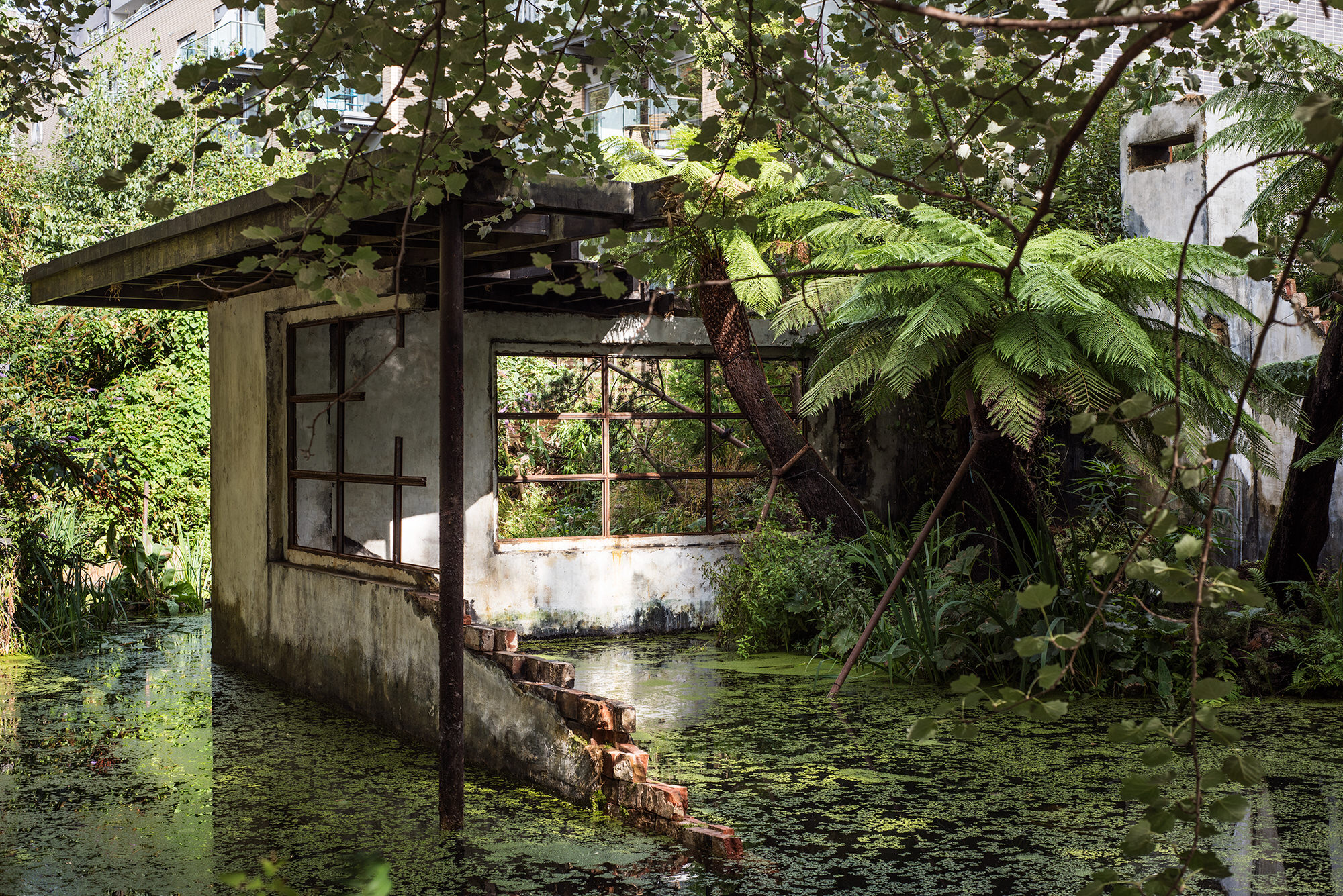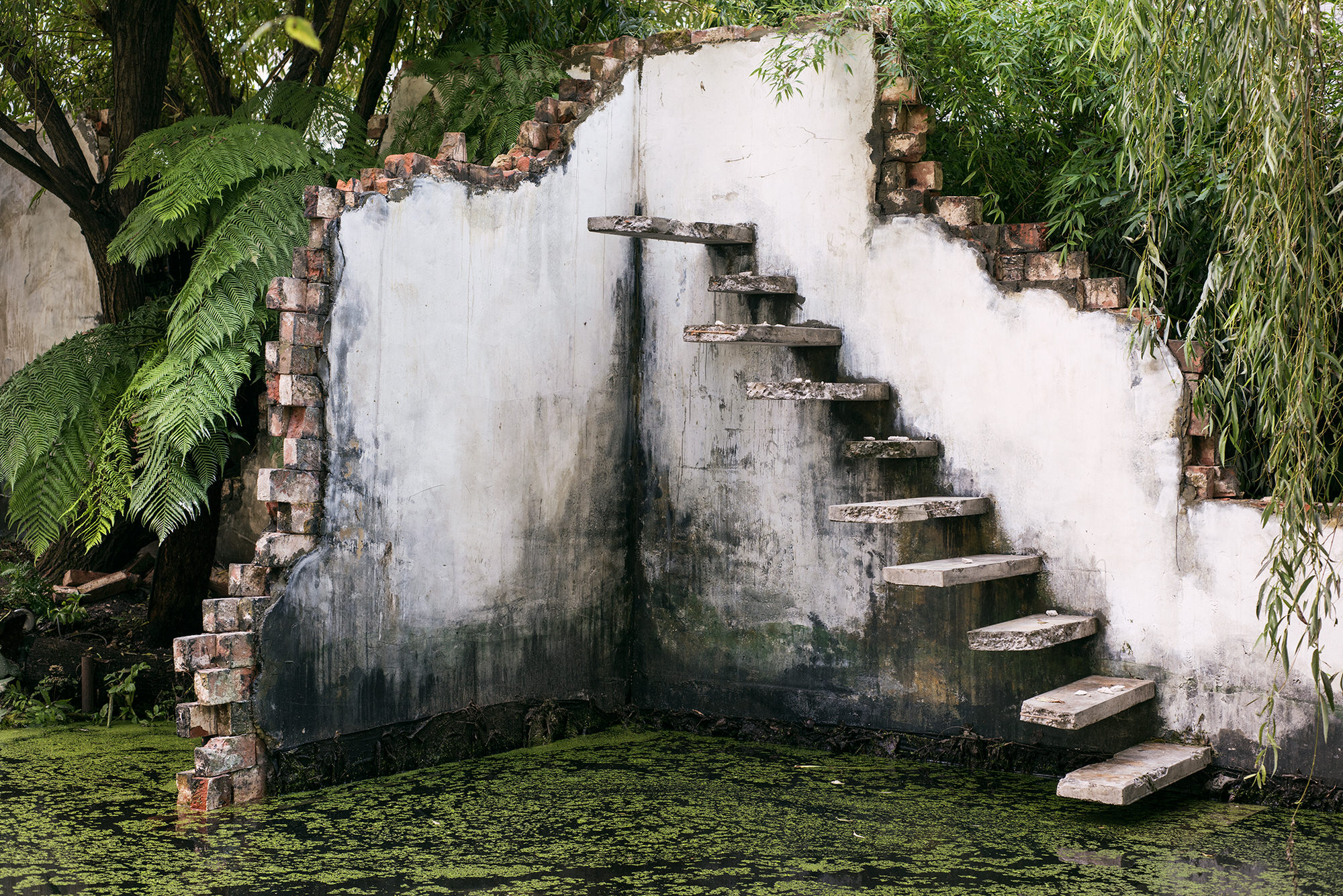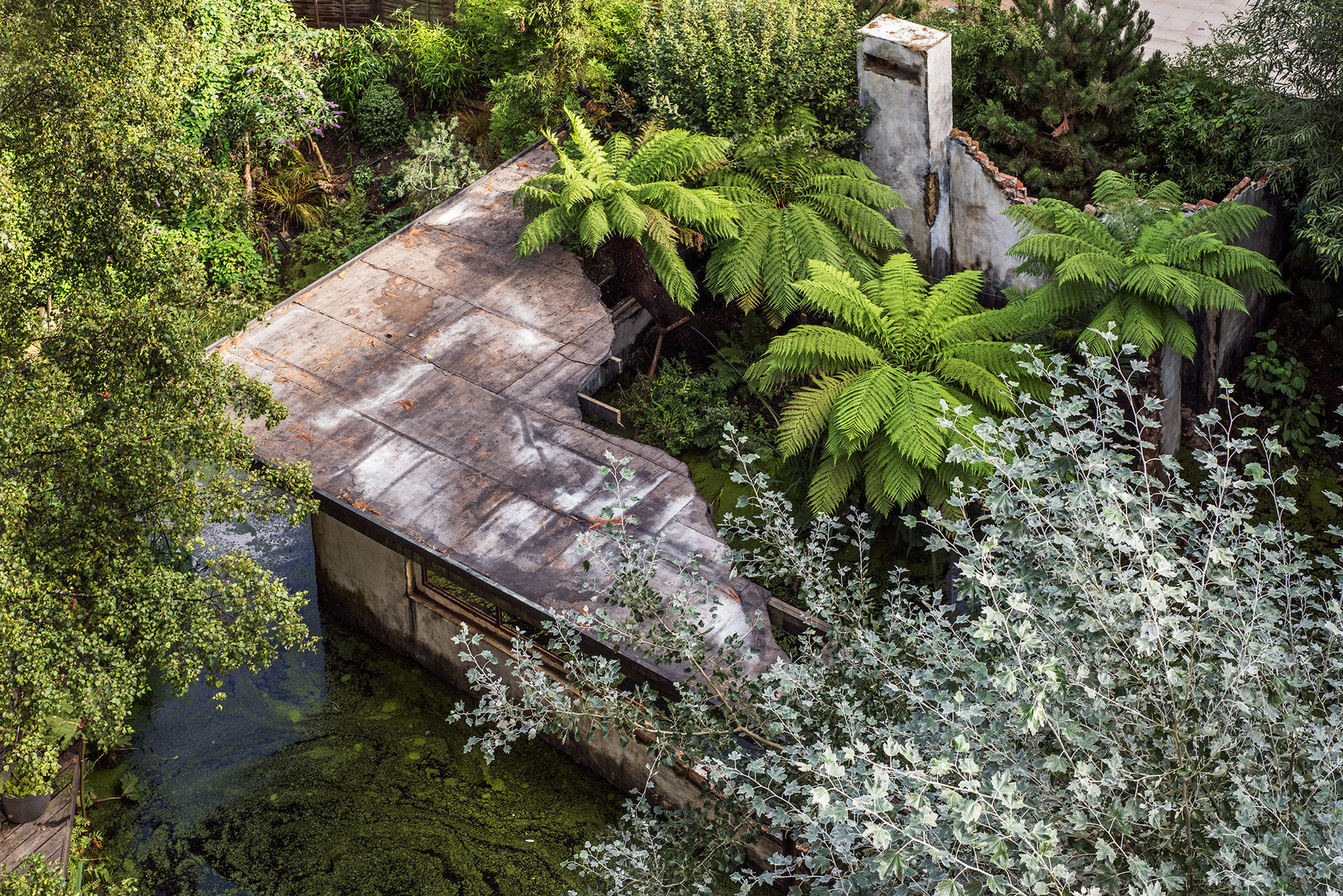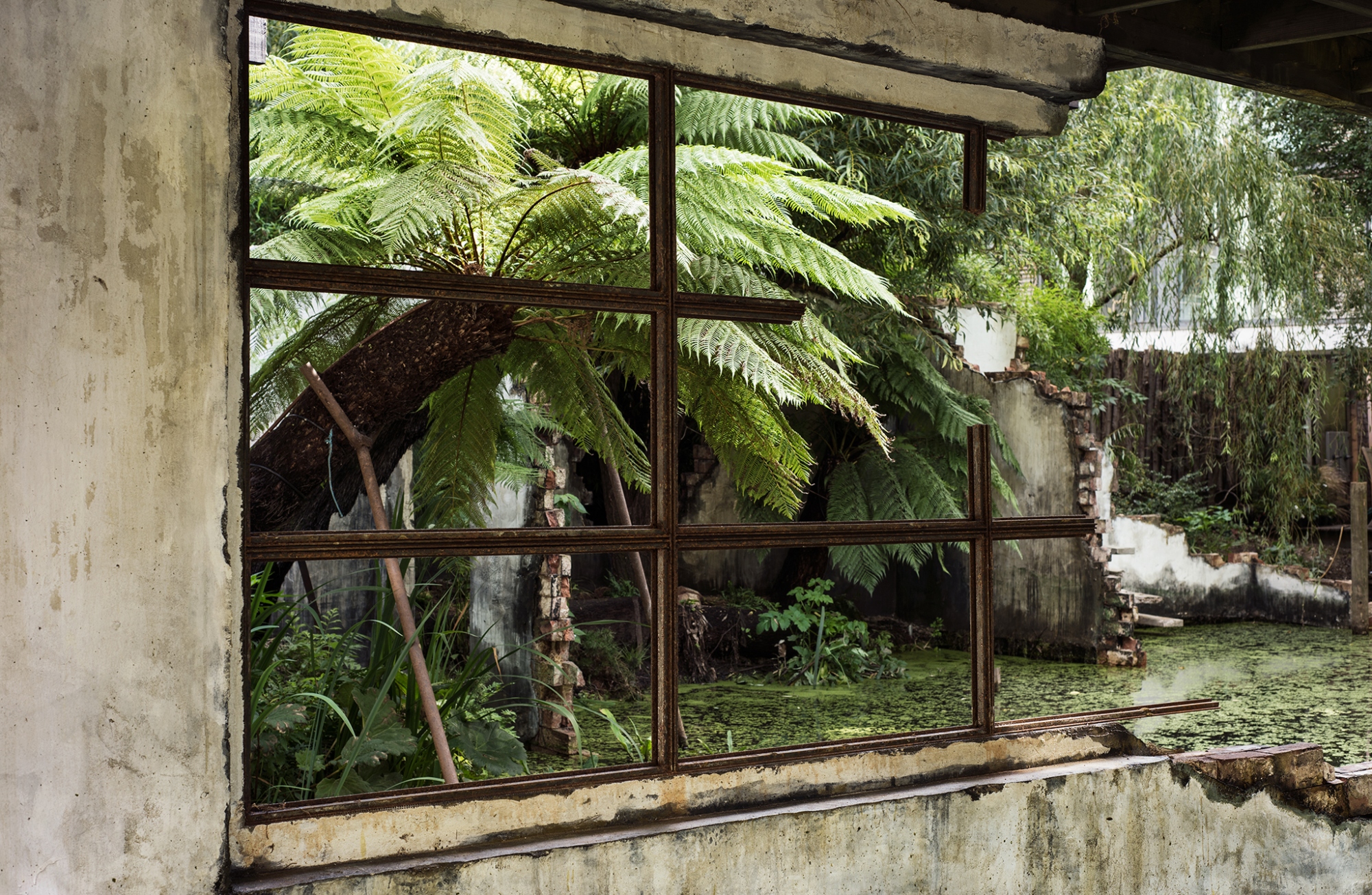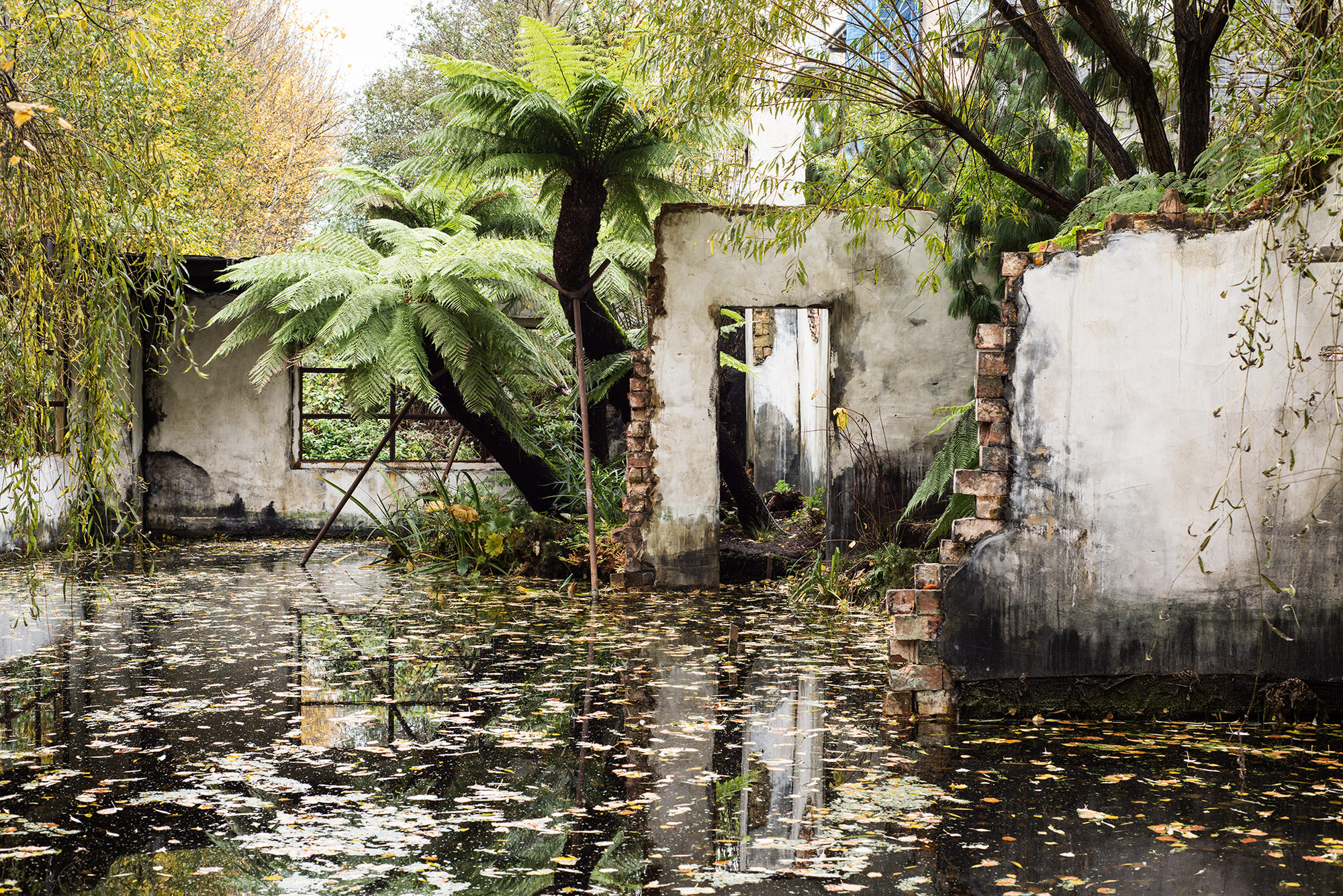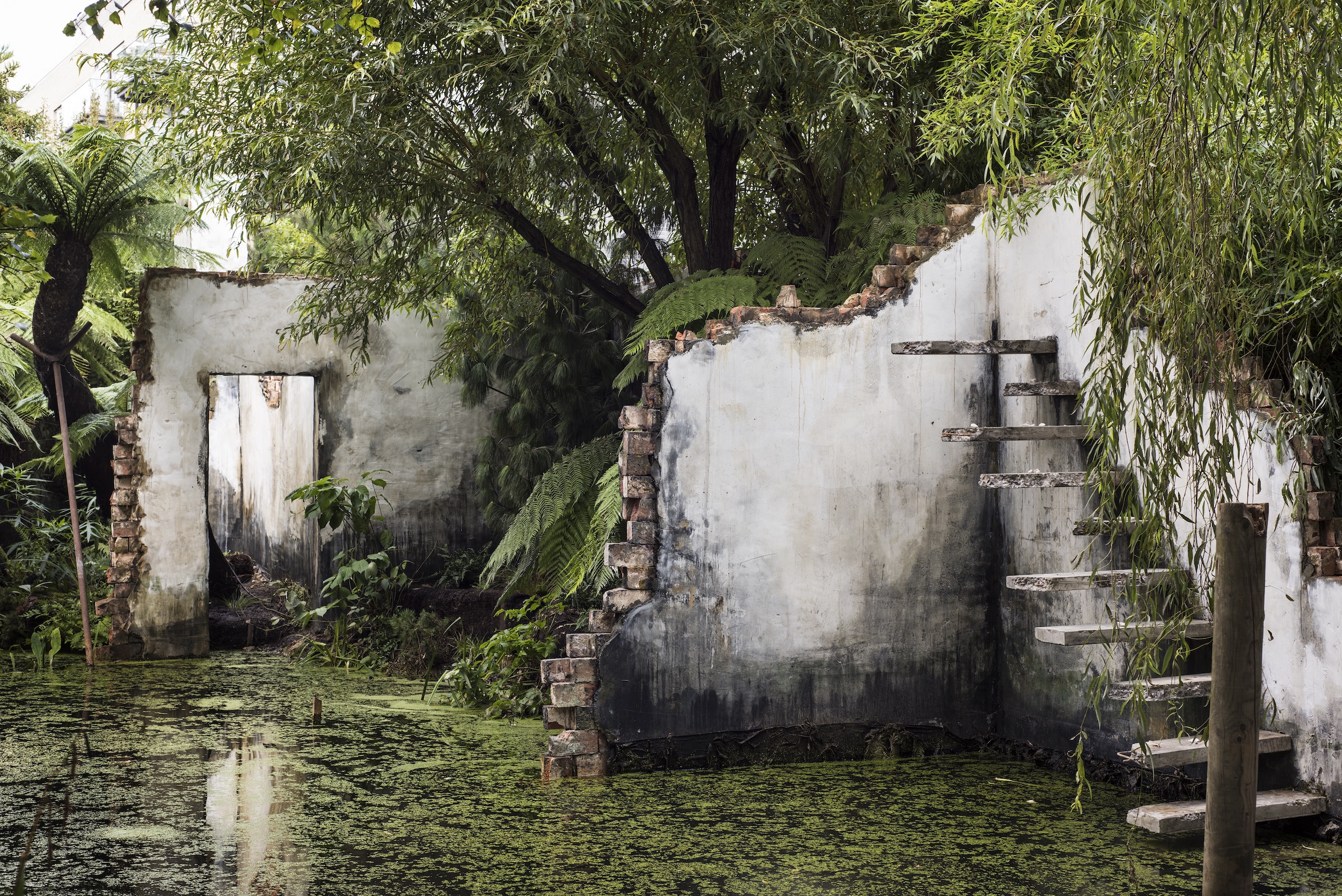
Resembling an International Style domestic building apparently abandoned to the elements, the major architectural intervention A Gentle Collapsing II transforms the gallery’s waterside garden into a scene of poetic dereliction and decay. Built on the canal bank and into the water itself, the work encapsulates classic modernist tropes – yet the structure and what it appears to portray – a home vacated without explanation, open to the elements, its white rendered walls peppered with black mould rising from the waterline – stands in stark contrast to images of domestic architecture and attendant aspirational lifestyles from the period. Instead, created especially for the garden, with its tree ferns suggestive of an ancient subtropical or temperate landscape, A Gentle Collapsing II looks to have undergone an accelerated process of ageing. It is as if we have been teleported into the future in order to look back at the present or very recent past.
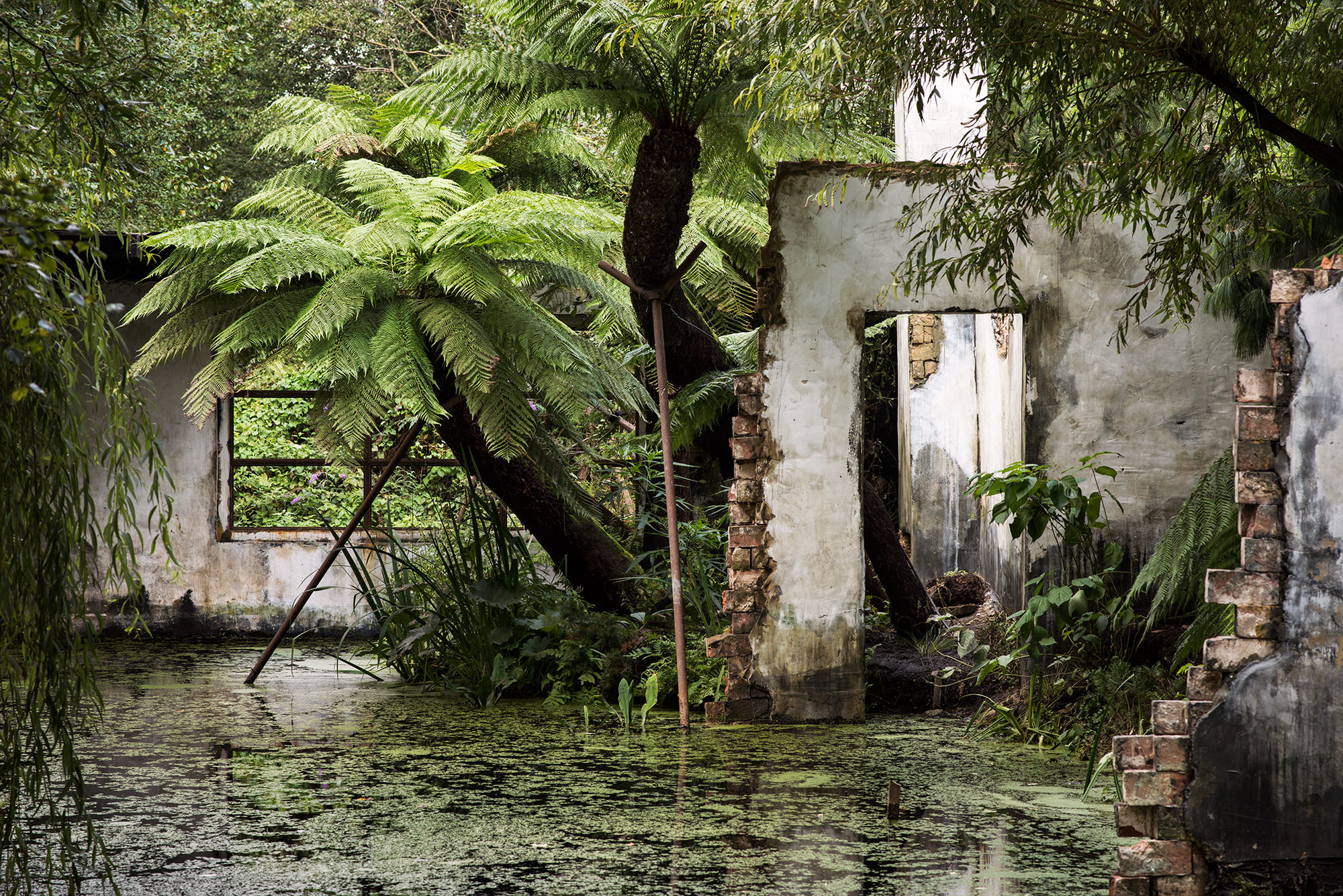
The work offers poignant reflection on themes of entropy and decay. It is, in some ways, emblematic of a wider collapsing – of ideals or even spirit. Running contrary to such thoughts, however, is the undeniable aesthetic pleasure we find in ruins – their compelling, transportative quality. In this sense, A Gentle Collapsing II becomes a kind of time machine that frees the mind to wander, gently collapsing or dislocating a sense of linear time as it does so. The work chimes with the idea of the folly as a faux historical structure placed in the landscape to act as a conversation piece, with the real-life ruins that seduced aristocratic tourists on the Grand Tour in the eighteenth century, a three dimensional capriccio.
Photo credit info/copyright